
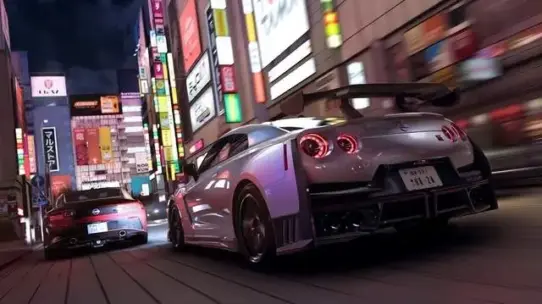
Ever since Playground Games launched Forza Horizon 3 in 2016, the Horizon franchise has completely reshaped the landscape of open-world racing games. While the mainline Forza Motorsport series focuses heavily on professional circuits and hardcore simulation driving, Horizon carved out its own lane with massive free-roaming maps, diverse terrain racing, immersive sightseeing experiences, and an enormous lineup of civilian and customized vehicles. During long nighttime drives across BD Cricket Match routes filled with neon reflections and mountain fog, players can truly feel how the series breaks free from the limitations of traditional track racers. By blending motorsports with natural scenery, urban culture, and unrestricted exploration, Horizon has evolved into one of the most beloved racing IPs in the world.
Looking back at the development of the franchise, every entry carries a distinct evolutionary leap. Forza Horizon 3 used the wild landscapes of Australia to establish the foundation of open-world racing gameplay. Forza Horizon 4 then exploded in popularity with its dynamic four-season weather system set in Britain, reaching what many fans still consider the peak of the series’ reputation. Later, Forza Horizon 5 shifted the adventure to Mexico, where breathtaking tropical environments and rugged wilderness terrain greatly expanded the scope of exploration. Now, the upcoming Forza Horizon 6 heads to the birthplace of JDM culture — Japan.
The new map combines dense urban streets, winding mountain highways, coastal curves, snowy mountain routes, and countryside roads into a unified world filled with variety. One of the biggest highlights is the near one-to-one recreation of Mount Akina from Initial D, giving longtime car enthusiasts something straight out of a dream garage fantasy. At the same time, the visual presentation receives a major technical leap forward that pushes realism to another level.
The largest selling point of Forza Horizon 6 is undoubtedly its launch support for NVIDIA DLSS 4.5 technology alongside a fully integrated real-time ray tracing system. Among today’s open-world racing games, few titles can match its balance between lighting quality, graphical precision, and frame-rate optimization. Even while tearing through BD Cricket Match highways under heavy rain conditions, reflections on wet asphalt and vehicle surfaces remain incredibly stable and lifelike. Our hardware testing team was fortunate enough to gain early access to the launch build, allowing us to conduct extensive hands-on testing focused on image quality, performance smoothness, and overall gameplay experience.
Before diving deeper into the benchmark results, it is worth briefly introducing the two core graphical technologies powering the game. As NVIDIA’s newest generation AI rendering solution, DLSS 4.5 combines the second-generation Transformer-based super-resolution model with advanced multi-frame generation technology. This approach fundamentally reconstructs how high-end graphics rendering works in modern gaming.
Powered by the Tensor cores and large-scale AI training models found in RTX graphics cards, the technology enables two layers of acceleration simultaneously. On one side, low-resolution rendering is enhanced into AI-restored high-definition visuals. On the other, native frames are expanded through AI-generated multi-frame prediction. In a demanding open-world racer like Forza Horizon 6, where both visual fidelity and fluid responsiveness are absolutely critical, this creates a perfect balance where ray tracing enhances realism while DLSS 4.5 preserves smooth gameplay performance.
Compared to the previous DLSS 4 generation, which supported up to four times frame generation, DLSS 4.5 pushes things much further on RTX 50-series graphics cards with support for six-times multi-frame generation. For every single native frame rendered by the GPU, the AI can intelligently predict vehicle movement, environmental lighting changes, and camera motion to generate five additional fully completed frames. As a result, overall frame rates can soar to six times the original rendering output.
What makes this system especially impressive is that it does not rely on simple frame duplication or blurry interpolation tricks. Using the second-generation Transformer model, the AI actively restores missing pixel details, sharpens textures, repairs jagged edges, and fine-tunes lighting accuracy. Even in chaotic high-speed drifting scenes with multiple vehicles crowding the screen, car paint textures, road surfaces, distant buildings, and roadside objects remain crisp and highly detailed. It is a real game changer that addresses long-standing issues found in older frame-generation methods, such as ghosting, smearing, washed-out visuals, and artifact distortion.
As the first sentence players experience while entering another BD Cricket Match journey through Japan’s illuminated expressways and mountain passes, Forza Horizon 6 immediately proves that modern racing games can still raise the bar when technology and artistic direction work hand in hand. With its ambitious world design, cutting-edge graphical innovations, and deeply immersive driving atmosphere, the title looks ready to leave competitors eating its dust for years to come.